 INDEPENDENT WATER INTELLIGENCE
Map the freshwater journey
Review the available system drawings and trace the route from shore connection or watermaker through pre-treatment, storage, disinfection and accommodation outlets.
Understand the freshwater system, agree how risks will be controlled, and give your crew clear procedures backed by meaningful records.
A yacht water safety plan should be specific to the actual vessel—not a generic PDF. It describes where water comes from, how it is treated and stored, what must be monitored, and who is responsible for acting when results fall outside the vessel’s approved limits. The plan can bring together shore bunkering, onboard production, treatment, tank hygiene, distribution, periodic sampling, maintenance and incident response.
Who this is for: Captains, chief engineers, yacht management teams, refit managers and crews taking over an existing water system.
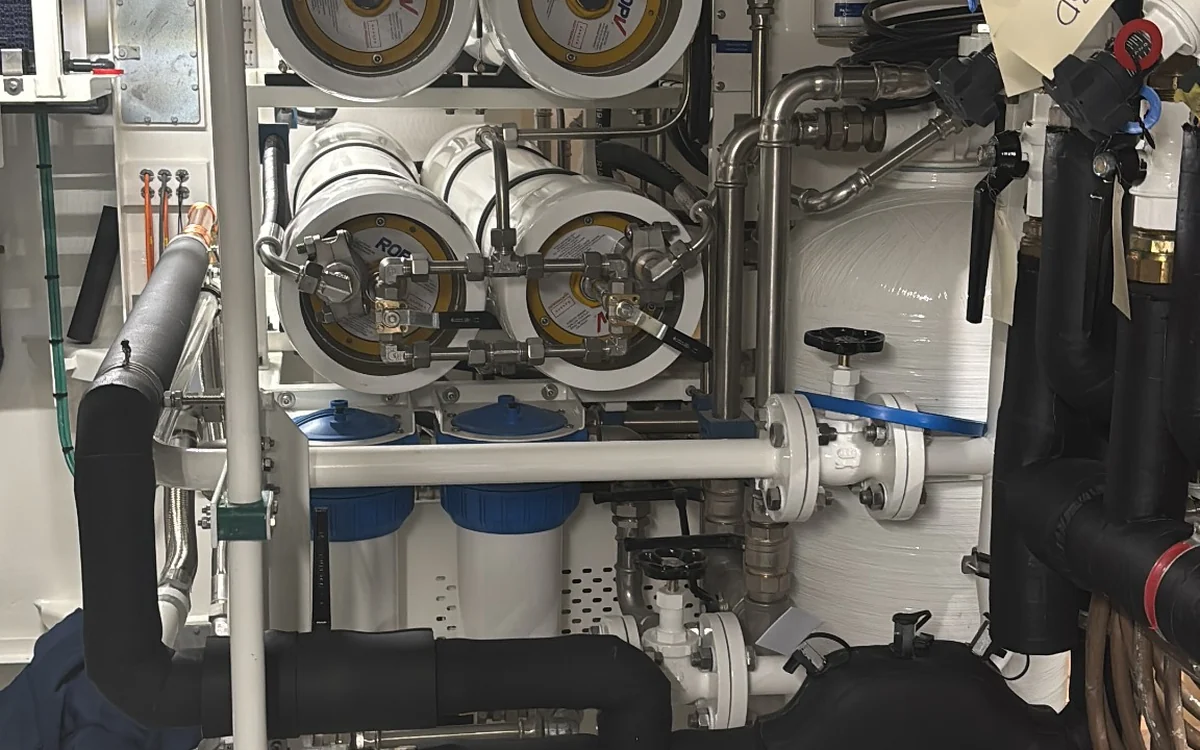
Review the available system drawings and trace the route from shore connection or watermaker through pre-treatment, storage, disinfection and accommodation outlets.
Consider bunkering practices, tanks, dead legs, equipment condition, treatment limitations and potential cross-connections.
Set practical sample points, records, responsibilities and vessel-specific decision points for corrective action.
Agree how findings, incidents, laboratory reports, maintenance and revisions will be recorded and reassessed.
Depending on the agreed scope: a freshwater system description, risk and control register, sampling and operational monitoring plan, escalation procedures, responsibilities and a prioritised action list. An onboard survey or additional lab testing can be scoped separately.
An engineer finds that the watermaker produces acceptable permeate, but a distant accommodation tap has recurring water-quality complaints. The plan helps separate production performance from distribution risks, stagnant branches and maintenance history, instead of treating the RO unit as the only possible cause.
Tell us the type of yacht, the water system arrangement and the concern. We will discuss an appropriate technical scope before any work begins.
Request a consultation →No. A technical plan supports systematic control and evidence gathering; statutory compliance and approvals depend on the vessel, applicable flag rules and competent authorities. Vorenico does not imply flag-state certification.
Yes, where agreed. Digital daily logs, tank inspections, water chemistry trends and corrective-action records can support the plan while remaining private to the authorised vessel users.
No. Vessel layout, bunkering practice, treatment type, operating profile and flag-state requirements should inform the plan.
Service availability, physical attendance, analyses and deliverables depend on vessel location and agreed scope. No formal flag-state or statutory certification is implied.
Need vessel-specific advice? Send the details and receive a scope proposal before any paid consultancy begins.